
- Introduction & Glomerulonephritisد.محمد حسن 26
- Introductionد.محمد حسن 26
- Introduction تفريغ2026
- NotebookLMمصادر26 + mindmap etc.....
- ai شرحشرح من التفريغات ai 2026
II. Renal Physiology & Basic Functions
- Structure: The Nephron (Glomeruli and Tubules: Proximal, Distal, Loop of Henle, and Collecting Duct).
- General Function: Filtration to form urine.
- Glomerular Filtration Rate (GFR): Depends on renal perfusion.
- ⭐️Important: The kidneys receive 20-25% of cardiac output, which is highly dependent on blood pressure.
- Core Tubular Functions: Reabsorption, Secretion, and Metabolism (e.g., Sodium/Potassium balance).
Endocrine Functions of the Kidney
- Renin: Activates the RAAS system, leading to salt/water retention and increased blood pressure.
- Erythropoietin: Crucial for RBC production.
- 📝MCQ: Renal patients almost always have anemia due to low Erythropoietin.
- ADH (Vasopressin): Acts on tubules.
- 📝MCQ: Lack of response in the kidney leads to Nephrogenic Diabetes Insipidus.
- Insulinase Enzyme: Breaks down insulin.
- ⭐️Important: Kidney patients are prone to severe hypoglycemia because insulin is not degraded efficiently.
- Others: Aldosterone, Prostaglandins (Vasodilators), Nitric Oxide (VD), and Endothelin (VC).
III. Symptomatology (Renal Presentation)
1. Pain
- Renal Pain: Typically dull aching pain (e.g., Pyelonephritis, stones).
- Ureteric Pain: Colicky/spasmodic pain (Stones, crystals).
- Bladder/Prostatic Pain: Frequency, Dysuria, Urgency.
2. Hematuria (Red Urine)
- Definitions: Gross (visible) vs. Microscopic.
- Causes:
- Pre-renal: Bleeding disorders.
- Renal: Glomerulonephritis (GN).
- Post-renal: Stones, tumors, infection (ureter, bladder, prostate).
- ⭐️Important: The Approach to Hematuria is a common exam question that many students struggle with.
3. Proteinuria
- Presentation: Foamy/Frothy urine.
- Levels: Normal is <150 mg/day. Nephrotic range is >3.5 g/day.
- 📝MCQ/⭐️Important: Microalbuminuria (Urinary ACR) is a simple test to detect early kidney damage (30-299 mg/g). It is the earliest sign of Diabetic Nephropathy.
4. Urine Output
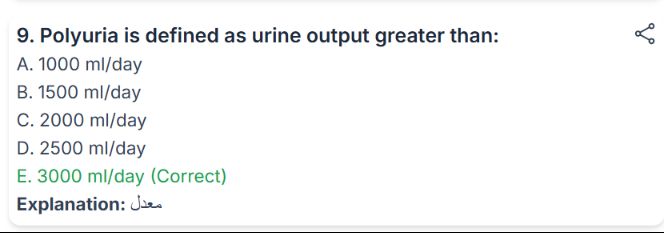
- Polyuria: >3 L/day (e.g., DM, DI, Interstitial nephritis).
- Oliguria: <400 cc/day.
- High Specific Gravity: Pre-renal (concentrated urine).
- Low Specific Gravity: Acute Renal Failure (tubular damage).
- Anuria: <100 cc/day (e.g., complete obstruction or severe renal failure).
IV. General Examination of Renal Patients
- Consciousness: Watch for Uremic Encephalopathy (Drowsiness/Disturbed consciousness).
- Blood Pressure: ⭐️Important: Resistant Hypertension (uncontrolled by 3-4 drugs) often indicates a renal cause.
- Hand Exam (📝MCQ/⭐️Important): Half-and-half nail (distal brown/pink, proximal white) is characteristic of chronic renal failure.
- Skin: Pallor (anemia), Pigmentation (dark discoloration), Uremic frost, or Bleeding tendency (due to platelet dysfunction/uremia).
- Edema: Particularly in Nephrotic syndrome.
Cardio-Renal Syndrome (5 Types)
- Type 1: Acute heart failure leading to acute kidney injury.
- Type 2: Chronic heart failure causing chronic renal impairment.
- Type 3: Acute kidney injury causing acute heart failure (e.g., via hyperkalemia/arrhythmia).
- Type 4: Chronic kidney disease causing chronic heart failure.
- Type 5: Systemic disease (e.g., Sepsis, SLE, DM) affecting both organs simultaneously.
V. Renal Investigations
1. Lab Assessment
- Glomerular function: GFR, Serum Creatinine, Urea, Uric Acid.
- Electrolytes:
- 📝MCQ: Na+ and K+ are more affected in Acute cases.
- 📝MCQ: Ca++ and Phosphorus are more affected in Chronic cases.
- ABG: Usually shows Metabolic Acidosis.
2. Urine Analysis (Casts) (📝MCQ/⭐️Important)
- Red Cell Casts: Diagnostic for Glomerulonephritis (Nephritic).
- White Cell Casts: Indicate Infection or inflammation (Pyelonephritis).
- Granular/Hyaline Casts: Seen in most chronic kidney diseases.
- Fatty/Lipid Casts: Characteristic of Nephrotic Syndrome.
3. Renal Biopsy (⭐️Important Exam Question)
- Indications: Unexplained AKI/CKD, Nephrotic syndrome (except children/diabetics), Systemic diseases (SLE, Vasculitis), Proteinuria >1g/day.
- Contraindications: Bleeding tendency, uncontrolled HTN (>160/95), Small shrunken kidneys (CKD), Multiple cysts, Suspected malignancy.
- Complications: Pain, bleeding, infection, perforation of the colon, or incorrect tissue sampling (liver/spleen).
II. Renal Physiology & Basic Functions
- Structure: The Nephron (Glomeruli and Tubules: Proximal, Distal, Loop of Henle, and Collecting Duct).
- General Function: Filtration to form urine.
- Glomerular Filtration Rate (GFR): Depends on renal perfusion.
- ⭐️Important: The kidneys receive 20-25% of cardiac output, which is highly dependent on blood pressure.
- Core Tubular Functions: Reabsorption, Secretion, and Metabolism (e.g., Sodium/Potassium balance).
Endocrine Functions of the Kidney
- Renin: Activates the RAAS system, leading to salt/water retention and increased blood pressure.
- Erythropoietin: Crucial for RBC production.
- 📝MCQ: Renal patients almost always have anemia due to low Erythropoietin.
- ADH (Vasopressin): Acts on tubules.
- 📝MCQ: Lack of response in the kidney leads to Nephrogenic Diabetes Insipidus.
- Insulinase Enzyme: Breaks down insulin.
- ⭐️Important: Kidney patients are prone to severe hypoglycemia because insulin is not degraded efficiently.
- Others: Aldosterone, Prostaglandins (Vasodilators), Nitric Oxide (VD), and Endothelin (VC).
III. Symptomatology (Renal Presentation)
1. Pain
- Renal Pain: Typically dull aching pain (e.g., Pyelonephritis, stones).
- Ureteric Pain: Colicky/spasmodic pain (Stones, crystals).
- Bladder/Prostatic Pain: Frequency, Dysuria, Urgency.
2. Hematuria (Red Urine)
- Definitions: Gross (visible) vs. Microscopic.
- Causes:
- Pre-renal: Bleeding disorders.
- Renal: Glomerulonephritis (GN).
- Post-renal: Stones, tumors, infection (ureter, bladder, prostate).
- ⭐️Important: The Approach to Hematuria is a common exam question that many students struggle with.
3. Proteinuria
- Presentation: Foamy/Frothy urine.
- Levels: Normal is <150 mg/day. Nephrotic range is >3.5 g/day.
- 📝MCQ/⭐️Important: Microalbuminuria (Urinary ACR) is a simple test to detect early kidney damage (30-299 mg/g). It is the earliest sign of Diabetic Nephropathy.
4. Urine Output
- Polyuria: >3 L/day (e.g., DM, DI, Interstitial nephritis).
- Oliguria: <400 cc/day.
- High Specific Gravity: Pre-renal (concentrated urine).
- Low Specific Gravity: Acute Renal Failure (tubular damage).
- Anuria: <100 cc/day (e.g., complete obstruction or severe renal failure).
IV. General Examination of Renal Patients
- Consciousness: Watch for Uremic Encephalopathy (Drowsiness/Disturbed consciousness).
- Blood Pressure: ⭐️Important: Resistant Hypertension (uncontrolled by 3-4 drugs) often indicates a renal cause.
- Hand Exam (📝MCQ/⭐️Important): Half-and-half nail (distal brown/pink, proximal white) is characteristic of chronic renal failure.
- Skin: Pallor (anemia), Pigmentation (dark discoloration), Uremic frost, or Bleeding tendency (due to platelet dysfunction/uremia).
- Edema: Particularly in Nephrotic syndrome.
Cardio-Renal Syndrome (5 Types)
- Type 1: Acute heart failure leading to acute kidney injury.
- Type 2: Chronic heart failure causing chronic renal impairment.
- Type 3: Acute kidney injury causing acute heart failure (e.g., via hyperkalemia/arrhythmia).
- Type 4: Chronic kidney disease causing chronic heart failure.
- Type 5: Systemic disease (e.g., Sepsis, SLE, DM) affecting both organs simultaneously.
V. Renal Investigations
1. Lab Assessment
- Glomerular function: GFR, Serum Creatinine, Urea, Uric Acid.
- Electrolytes:
- 📝MCQ: Na+ and K+ are more affected in Acute cases.
- 📝MCQ: Ca++ and Phosphorus are more affected in Chronic cases.
- ABG: Usually shows Metabolic Acidosis.
2. Urine Analysis (Casts) (📝MCQ/⭐️Important)
- Red Cell Casts: Diagnostic for Glomerulonephritis (Nephritic).
- White Cell Casts: Indicate Infection or inflammation (Pyelonephritis).
- Granular/Hyaline Casts: Seen in most chronic kidney diseases.
- Fatty/Lipid Casts: Characteristic of Nephrotic Syndrome.
3. Renal Biopsy (⭐️Important Exam Question)
- Indications: Unexplained AKI/CKD, Nephrotic syndrome (except children/diabetics), Systemic diseases (SLE, Vasculitis), Proteinuria >1g/day.
- Contraindications: Bleeding tendency, uncontrolled HTN (>160/95), Small shrunken kidneys (CKD), Multiple cysts, Suspected malignancy.
- Complications: Pain, bleeding, infection, perforation of the colon, or incorrect tissue sampling (liver/spleen).